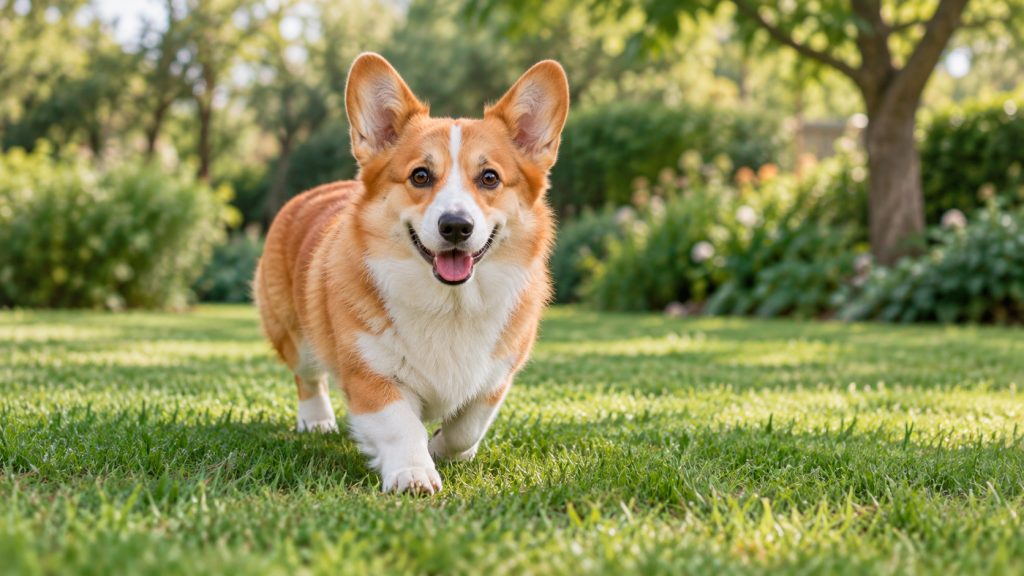
The Pembroke Welsh Corgi is known for its intelligence, affectionate nature and lively personality. Behind the short legs and expressive face is an alert, capable herding dog that enjoys being involved in family life. Pembrokes are typically outgoing and friendly, although every dog has its own temperament, shaped by inherited traits, early experiences and upbringing.
An active and intelligent herding dog
Originally developed to move cattle in Wales, Pembrokes needed stamina, confidence and the ability to respond quickly to a changing situation. These qualities are still part of the breed’s appeal today. Their boldness reflects a working background that required them to handle livestock much larger than themselves.
Despite their compact size, Pembrokes enjoy walks, play and opportunities to learn. They benefit from both physical activity and mental stimulation, such as short training sessions and games that encourage them to think. Exercise should suit the dog’s age, health and stage of development.
A companion who enjoys family life
Pembrokes often form close bonds with their families and like to know what everyone is doing. Many are happiest joining in everyday activities, whether that means going for a walk, playing in the garden or settling nearby while you work.
Some ask for attention with a gentle nudge of the nose or a paw placed on your arm. These small gestures are part of what makes them such engaging companions. Alongside enjoying company, they should have opportunities to learn to settle calmly and become comfortable with short periods alone, introduced gradually.
Although many Pembrokes are sociable, their response to unfamiliar people and dogs varies. Positive early experiences and thoughtful introductions help them develop confidence. Let each dog approach new people and dogs at its own pace.
Pembrokes and children
Many Pembrokes enjoy playing with children and can become affectionate family companions. A good relationship depends on considerate handling, suitable training and adult supervision.
Children should learn to stroke the dog gently, respect its resting place and leave it undisturbed while eating or sleeping. No dog should be expected to tolerate poking, pulling or tight hugs. Young children and dogs should never be left together unsupervised. Because fast movement can encourage chasing and herding, lively games may need extra guidance.
An expressive voice
Pembrokes can be vocal dogs. Barking may announce a visitor, respond to an unfamiliar sound or express excitement. Some also communicate through little grumbles, whines or playful sounds that their owners affectionately describe as “talking”.
How vocal a dog becomes varies between individuals. Learning what prompts the barking is more useful than assuming every sound means the same thing. Rewarding calm behaviour and providing appropriate activity can help owners establish good habits. Their alertness makes them attentive watchdogs, but barking does not automatically mean aggression.
Herding instincts and training
A Pembroke’s working instincts may appear in everyday life as chasing movement or nipping at heels, especially during puppyhood. In a family home, this behaviour can be directed towards people or other pets. It needs patient guidance rather than being accepted as something the household must simply tolerate.
Redirecting attention to an appropriate toy or a familiar cue, rewarding calm behaviour and keeping play manageable can help. Consistency matters, and progress will differ from one dog to another. Pembrokes learn quickly, but intelligence does not mean they arrive knowing the rules of your home.
A healthy approach to food
Many Pembrokes are enthusiastic about food, which can make small rewards useful during training. A willingness to eat, however, does not necessarily mean a dog needs a larger meal.
Measured portions, treats counted as part of the daily food allowance and regular checks of body condition help owners manage weight. The amount of food should reflect the individual dog’s needs, rather than how eagerly it asks for another serving. A healthy weight supports comfort, mobility and overall wellbeing.
Every Pembroke has its own personality
Some Pembrokes are mischievous and outgoing, while others are quieter or more thoughtful. Even puppies from the same litter can differ in confidence, energy and how they seek attention.
Understanding the individual dog is just as important as knowing the breed. With kind, consistent training, appropriate activity and attentive care, a Pembroke Welsh Corgi can become an affectionate, entertaining and deeply valued member of the family.